
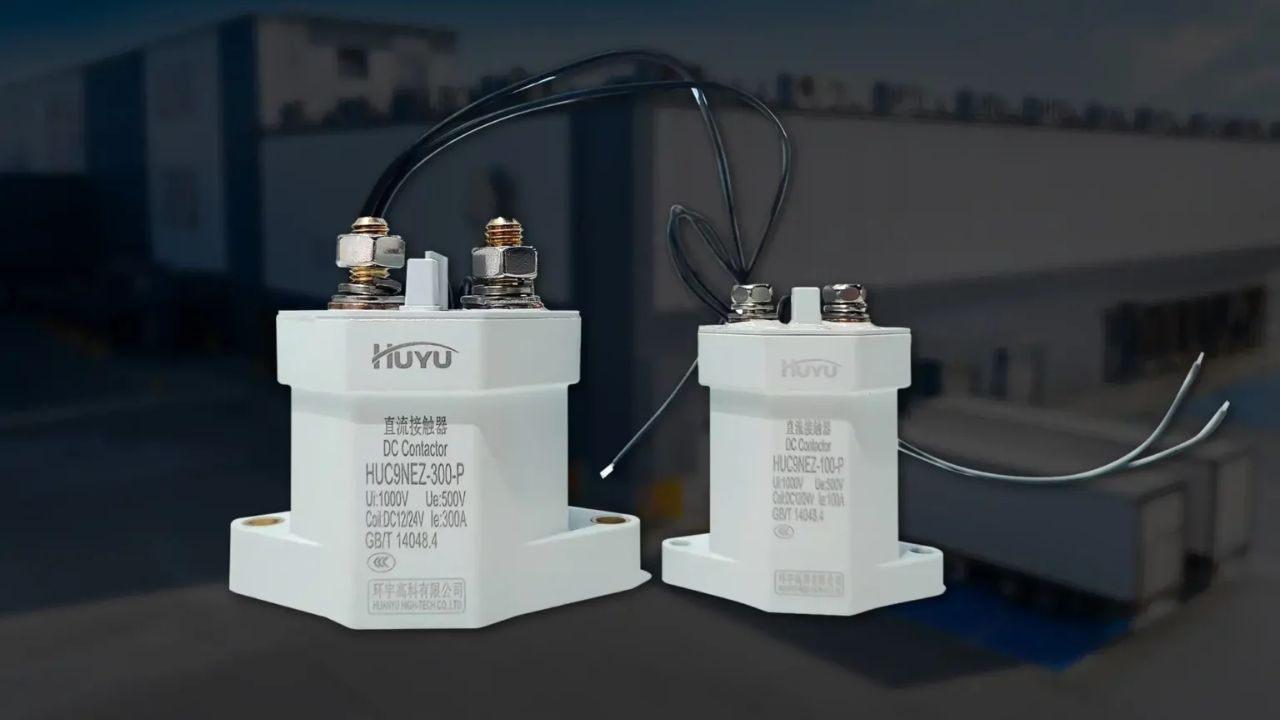
The need to find electrical components that are flexible and reliable has never been more important in the fast-changing energy and industrial environment. DC contactors are one of such components, which are important in regulating and safeguarding electrical circuits, especially the high voltage ones. A frequent challenge that engineers and project designers may encounter is the ability of dc contactor to be designed to fit the special needs of solar energy systems and electric vehicles (EVs), as well as industrial applications. The answer is a resounding yes, and it is necessary to know the customization options so as to maximize the performance and the safety of the system.
The Importance of Customization in Modern Applications
General-purpose electrical switching is served by standard DC contactors; however, the current energy and industrial systems tend to pose special challenges. Extensive areas like solar power installations also need contactors that can easily conduct high-voltage DC currents, which may change with the current environmental conditions. On the same note, EV charging infrastructure requires contactors capable of sustaining high rates of on and off operations and can also provide the safety of the vehicle, as well as the power grid. Contactors must also be able to operate under extreme conditions of elevated vibration, dust, or temperature, and be able to conduct at a certain level of voltage and currents.
Voltage and Current Customization
Voltage and current ratings are one of the main features that can be customized in DC contactors. Another example is HUYU Electric, which sells a series of DC contactors that can be used with DC as low as 12V DC, and with currents of 30A up to 1000A. This enables contactors to be customized to small-scale solar panels, large-scale energy storage units, EV charging stations, and heavy industrial equipment. Modification of these electrical parameters will allow tailor-made contactors to deliver the precise power demand of the system without overloading, to eliminate energy loss, and minimize early wear.
Contact Configurations and Arc Suppression
The other important customization is the contact configuration that defines the contactor and its interaction with a circuit. Normally open (NO), normally closed (NC), and changeover (CO) contacts provide engineers with the ability to design systems to suit the particular operational needs. There is also the possibility of improving arc suppression technology in customized contactors in order to support high-voltage or high-frequency switching. Good arc suppression prevents contact degeneration, lengthens the life of the equipment, and provides system security for the connected systems. This is particularly significant with solar arrays and EV charging stations, where repeated switching and high voltages otherwise can be of great danger.
Coil and Housing Adaptations
Energy-efficient coils and strong housing alternatives may also be customized in DC contactors. The low-power coil technology washes off standby energy usage, which is of paramount importance in the field of sustainable energy systems such as solar installations. The housing modifications, such as IP55 or IP65-resistant enclosures, shield the contactor against dust, water, and temperature extremes, and so are very dependable in industrial or outdoor conditions. These modifications ensure not only the increased durability of customized DC contactors but also their more reasonable use in mission-critical conditions where additional time can be costly or just lead to the loss of funds or operations.
Smart Features and Integration
Custom DC contactors may also be optionally fitted with monitoring and control functionality with the emergence of customizable smart energy and industrial solutions. Remote status monitoring, auxiliary contacts, and digital control system integration enable engineers to monitor performance in real time as well as respond swiftly to anomalies. This is applicable in EV infrastructure, through which operators can provide safe and efficient charging, and keep maintenance needs to a minimum. Smart contactors are used to promote predictive maintenance and automation of the system in industrial systems, which increases the overall efficiency of the system.
Meeting Project-Specific Requirements
Finally, the customization of DC contactors enables designers and engineers to develop solutions that perfectly match the needs of projects. Customized DC contactors not only offer the precision and flexibility required in modern systems of energy and industry but also the safety as well as long-term reliability, depending on whether that goal is to maximize energy efficiency, meet safety requirements, or achieve long-term reliability. There are other companies with advanced OEM and ODM services, such as HUYU Electric, which have proved that specific solutions can fulfill specific technical, environmental, and branding needs and provide consistent performance in applications of different types.
Conclusion
DC contactors are not a universal product. Using voltage and settings, contact configuration choice, enhanced arc suppression, durable design, and intelligent integration, these devices can be tailored to meet the special needs of solar, EV, and industrial systems. DC contactors are becoming an unavoidable element of a contemporary electrical infrastructure by enabling engineers to improve the performance of their systems, increase their safety, and extend the lifespan of their operation through the use of customization.
